
A peer-to-peer tool rental platform for New Homeowners
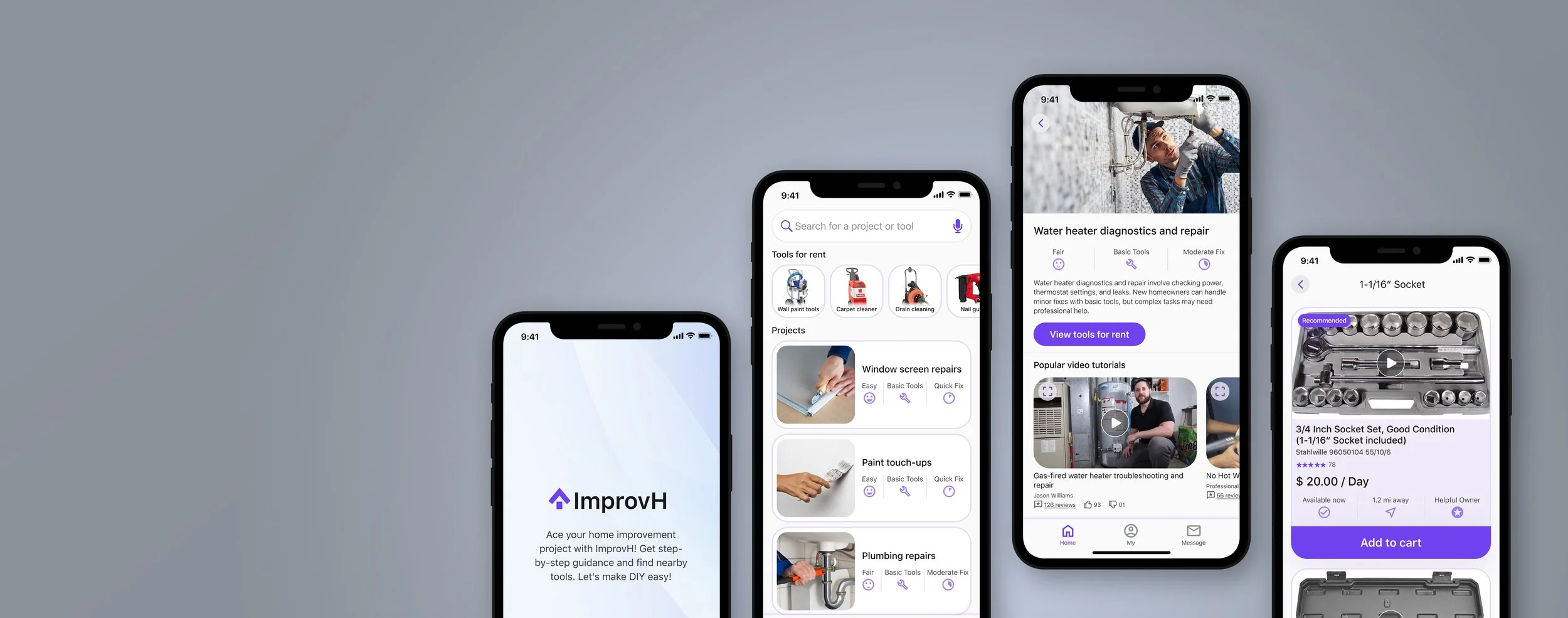
Problem/Background
Being homeowners, people like to make improvements to their homes. And there are regular maintenance and repairments that need to be done too.
New homeowners often struggle to undertake home improvement projects independently due to a lack of relevant knowledge and tools, while hiring professionals is typically cost-prohibitive.
Hypothesis
Design a peer-to-peer tool rental platform so that new homeowners can easily obtain relevant knowledge and rent the tools they need.
My Role
I work as the UX Researcher and UX Designer within a three-person team, alongside a Product Manager and a Developer.
Secondary Research
To determine if there is a market for a peer-to-peer tool rental platform focused on home improvement tools, we conducted secondary Research. After doing rounds of research online, we found very little information on home improvement tool rental platforms, except for some retail companies such as Home Depot and Lowe’s. So we moved on to primary research to hear firsthand our target audiences' experiences.
Primary Research
GOAL: To decide if there is a market for a peer-to-peer tool rental platform focused on home improvement tools, and to investigate what they like or dislike about their current methods of finding home improvement tools. I wanted to learn the users’ pain points and find out how I can improve their experience.
I conducted INTERVIEWS with the 4 participants that my team member selected from the potential user’s pool. The interview each took about 30 minutes in the presence of a stakeholder.
The most IMPORTANT QUESTIONS in the interview:
How do you know what tools you need for a home improvement project?
How do you get the tool?
Where do you get instructions about how to use the tool?
What do you think about these instructions?
What matters to you the most in the tool-rental process?
What are your frustrations throughout the project?
Below are the INTERVIEW PATTERNS:
100% of the participants thought “The rental time is not flexible at all!”
75% of the participants said, “Lack of knowledge is my main problem.”
75% of the participants thought “I need someone I trust to help me out through the project.”
50% of the participants said, “There is no quick answer or fix when I have a problem.“
Below shows the patterns based on the interview notes.
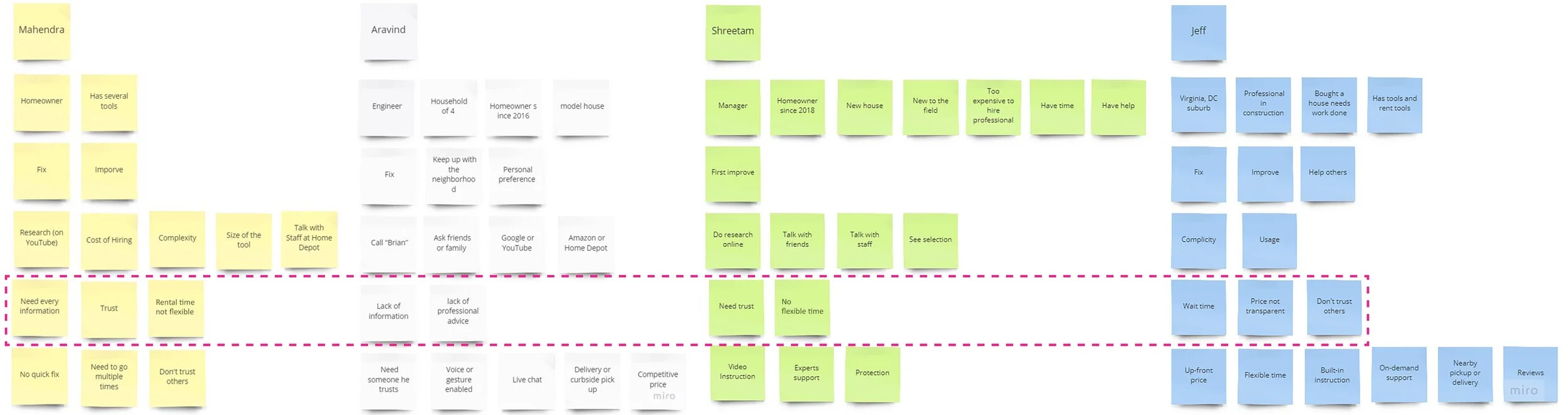
TAKEAWAYS: After conducting user research I found there is a big market for a peer-to-peer home improvement tool rental platform. And I concluded three major requirements I needed for the MVP:
Flexible rental time - which is the most important reason that the potential users will choose our product over retail companies.
Video instructions step by step with details that provide all the information the users need to know on their home improvement project, so they will be confident to do the projects by themselves.
Live chat with professionals so they can solve problems as soon as possible.
User Persona
GOAL: To summarize the users’ frustrations and goals from the interviews, and to select one persona as the primary persona to design our MVP.
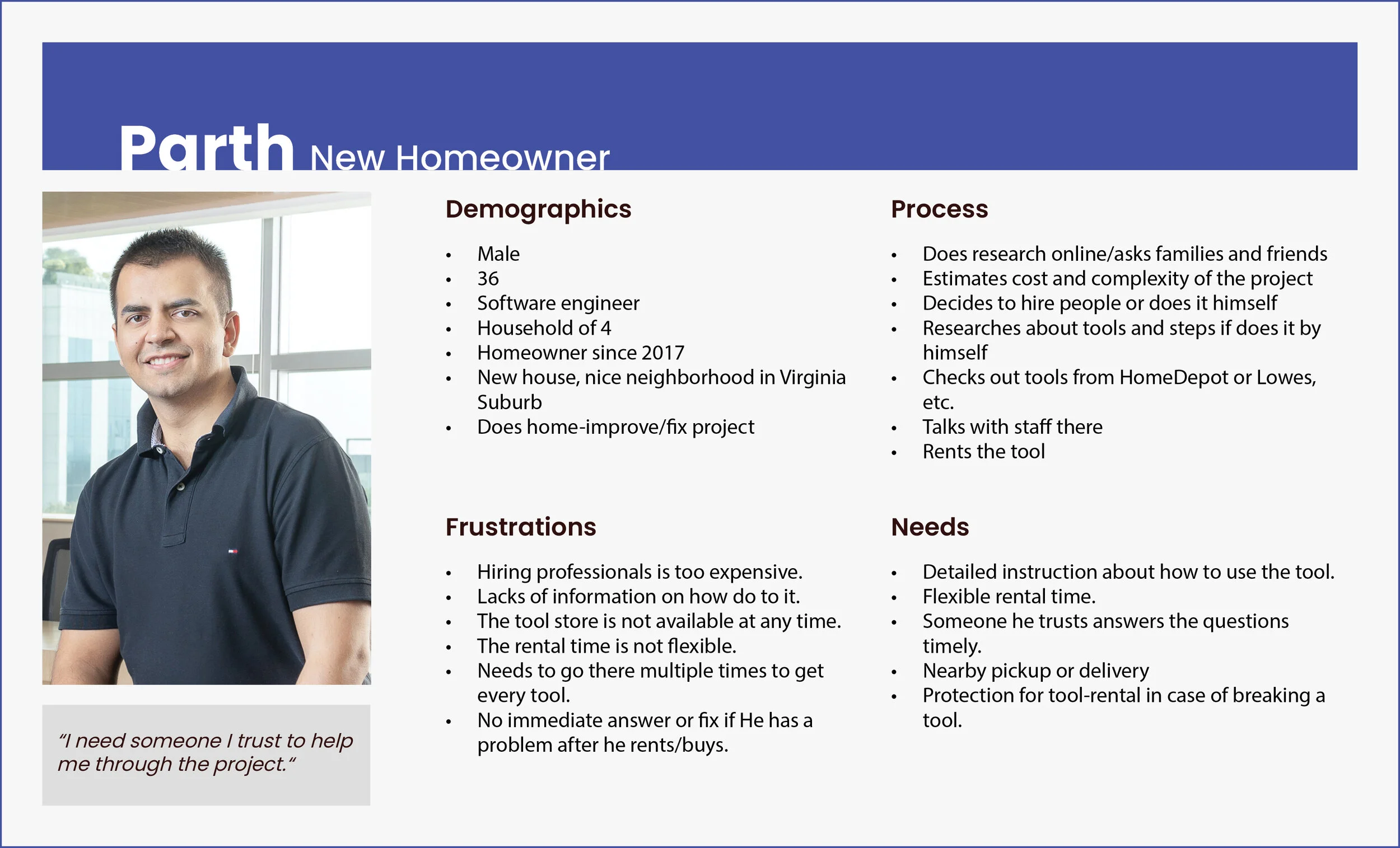
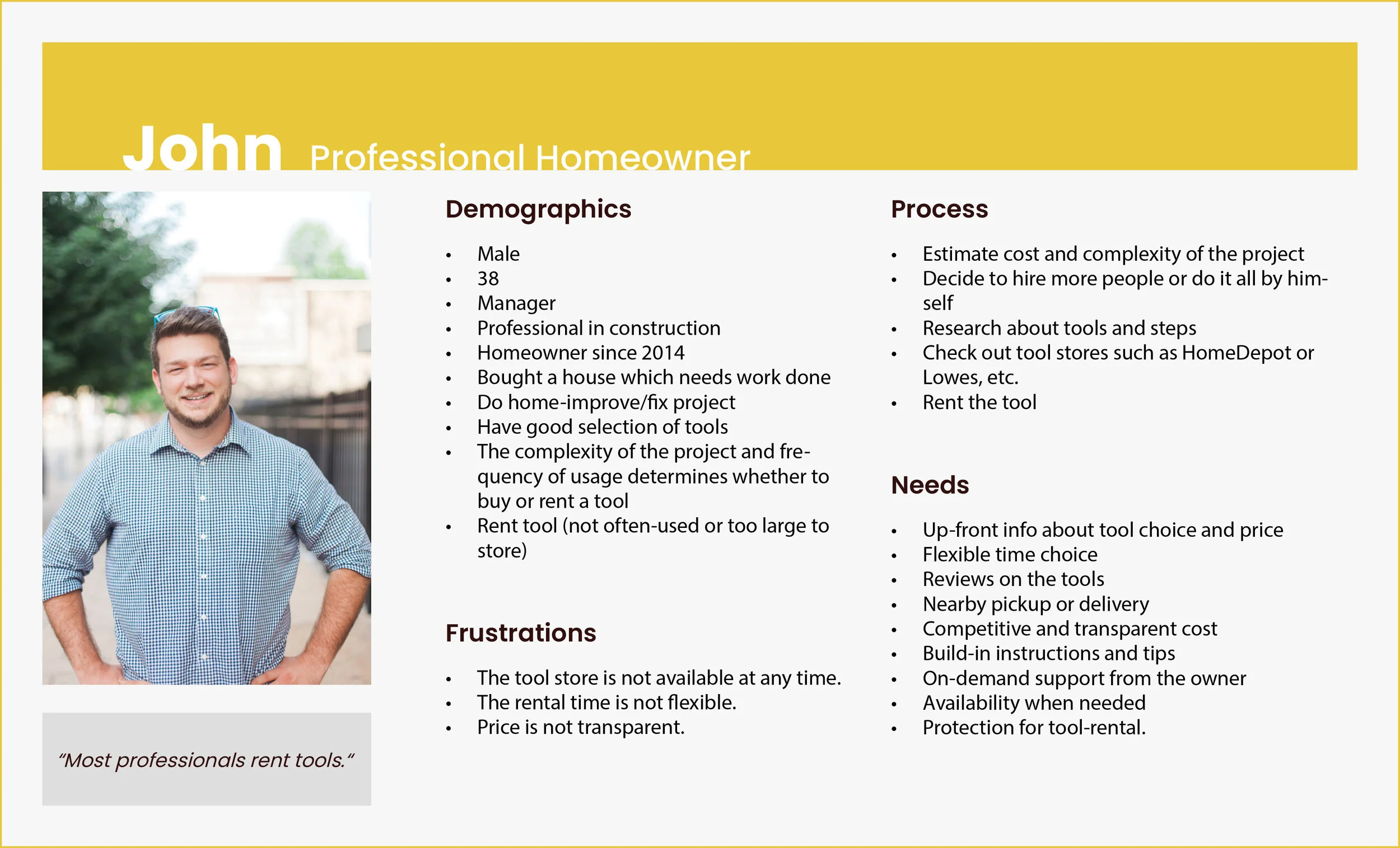
TAKEAWAYS: After creating these 2 personas, We decided to take “Parth the new homeowner - the renter“ as our primary persona because he represented the least capable type of people in home improvement projects, and a clear majority of interviewees were new homeowners.
Storyboard
I created a user storyboard to help define what my users would want to accomplish. Translating a human need into a feature allowed me to pinpoint solutions and necessary functionality from a user’s perspective.
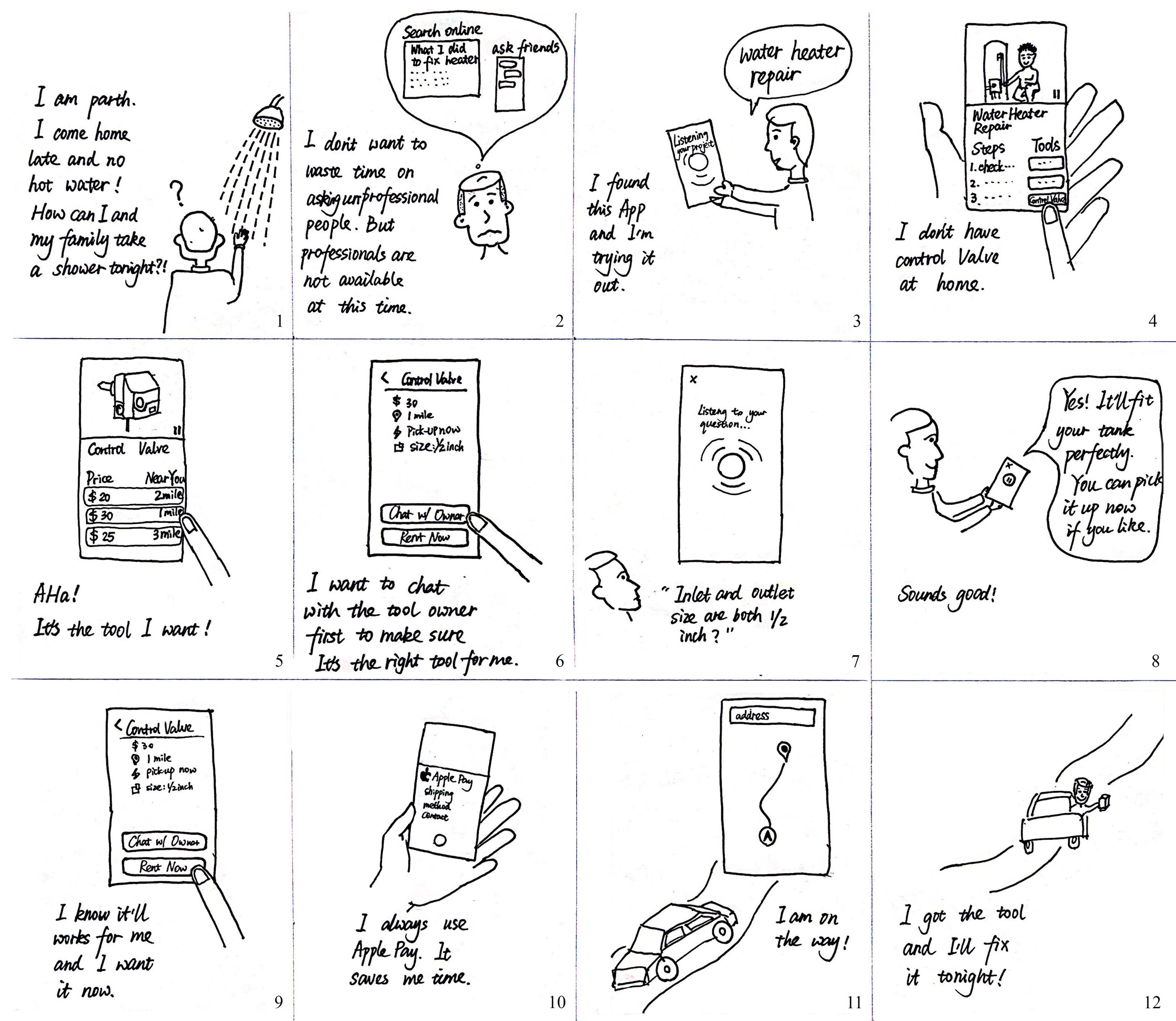
TAKEAWAYS: We created our MVP LIST:
“Lack of knowledge“ and “No flexible time“ for tool rental are the 2 biggest problems for Parth.
Search the project.
Learn how to do a project step by step.
Check the tool list and find the tool needed.
View detailed information about the tool.
Learn how the use the specific tool.
Rent the tool.
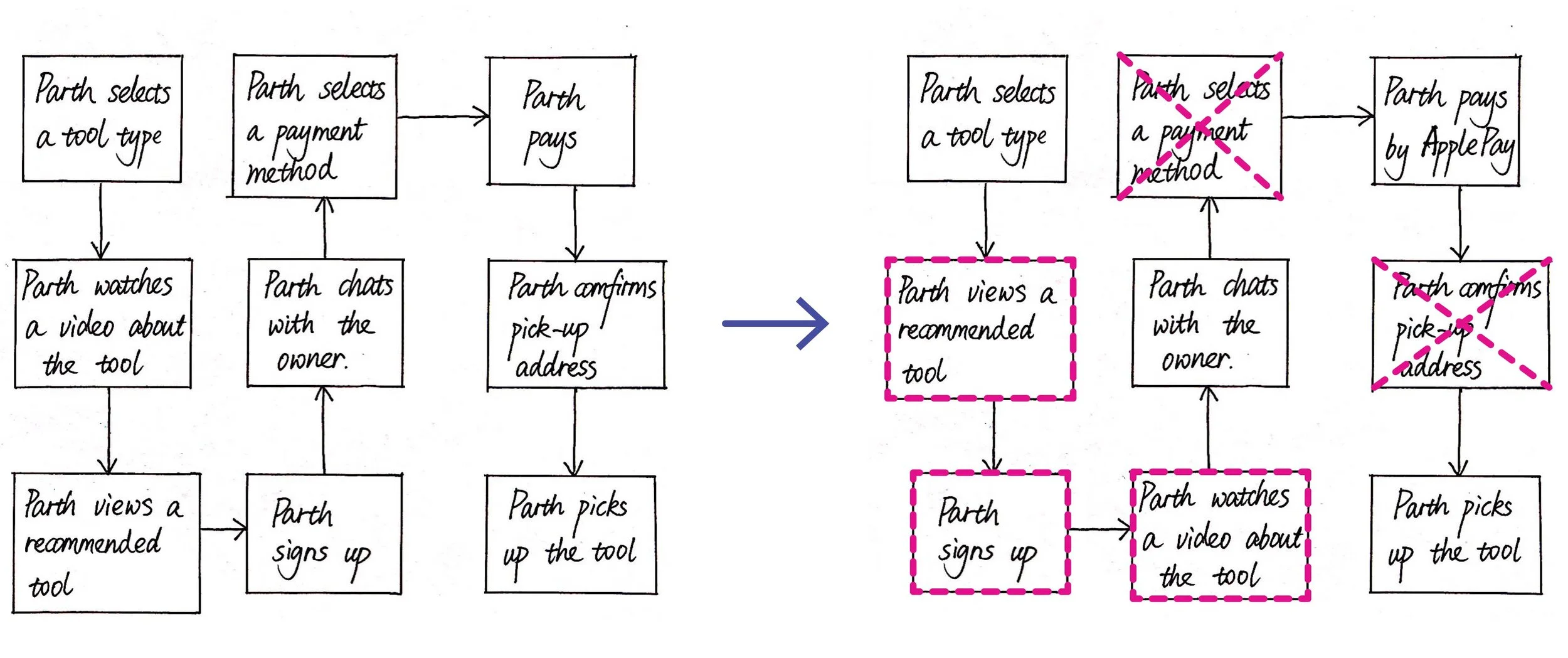
TASK FLOW
In the partial task flow showing tool rental process, we optimize the flow so Parth can easily rent a tool he wants.
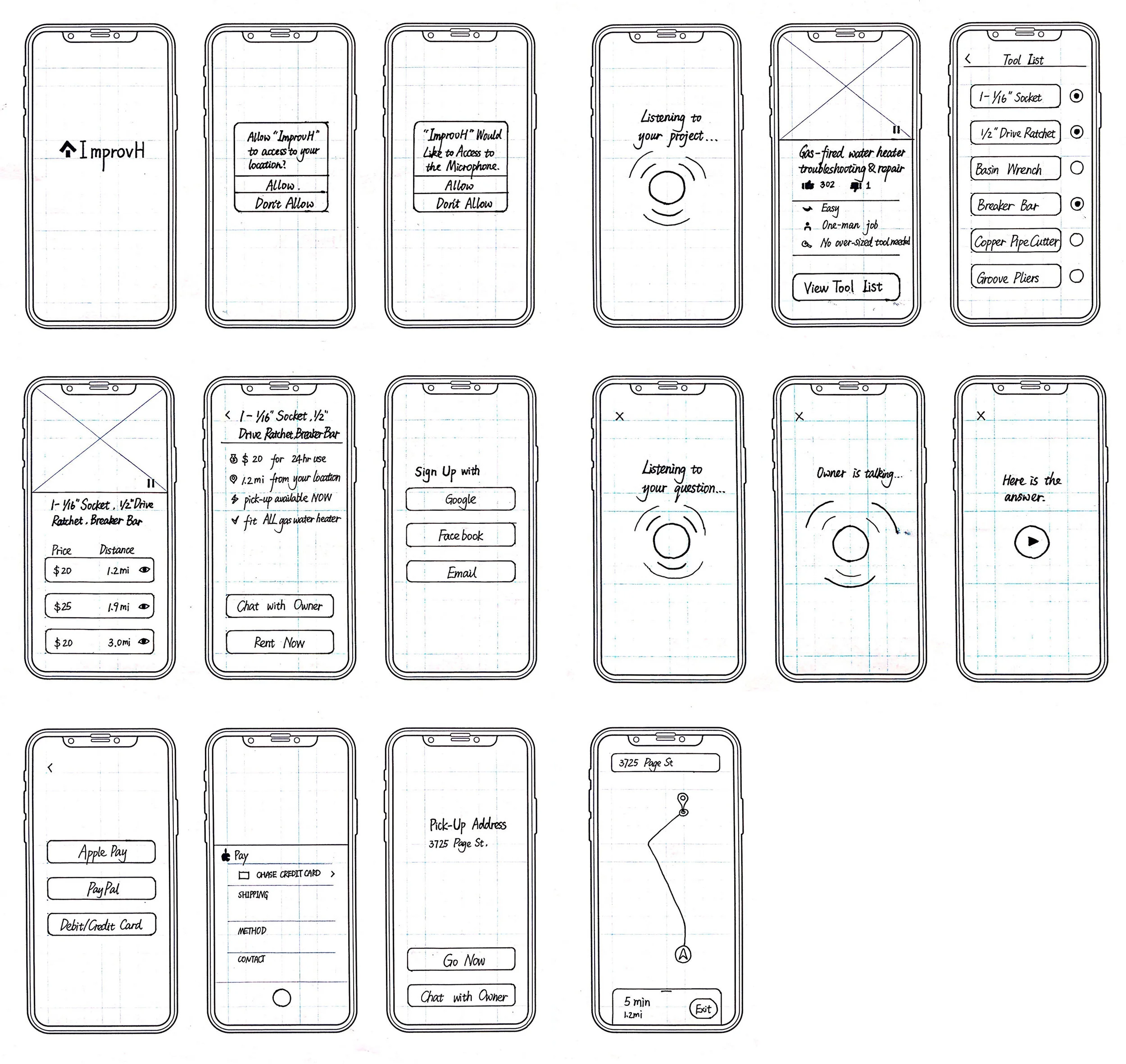
PAPER PROTOTYPE
The sketch below shows the key screens for Parth to learn how to do the project and rent the tool he wants.
USABILITY TESTING
We recruited 5 potential users like Parth for remote moderated usability testing. We observed their behavior while completing the tasks. Usability tests found step-by-step video instruction was the key to building up Parth’s confidence in working on projects by themselves. But they also needed more help in choosing the right tools for their projects.
Task
Figure out how to do this project step by step.
Rent a tool you need for this project.
Set up a time to pick up the tool.
Key findings
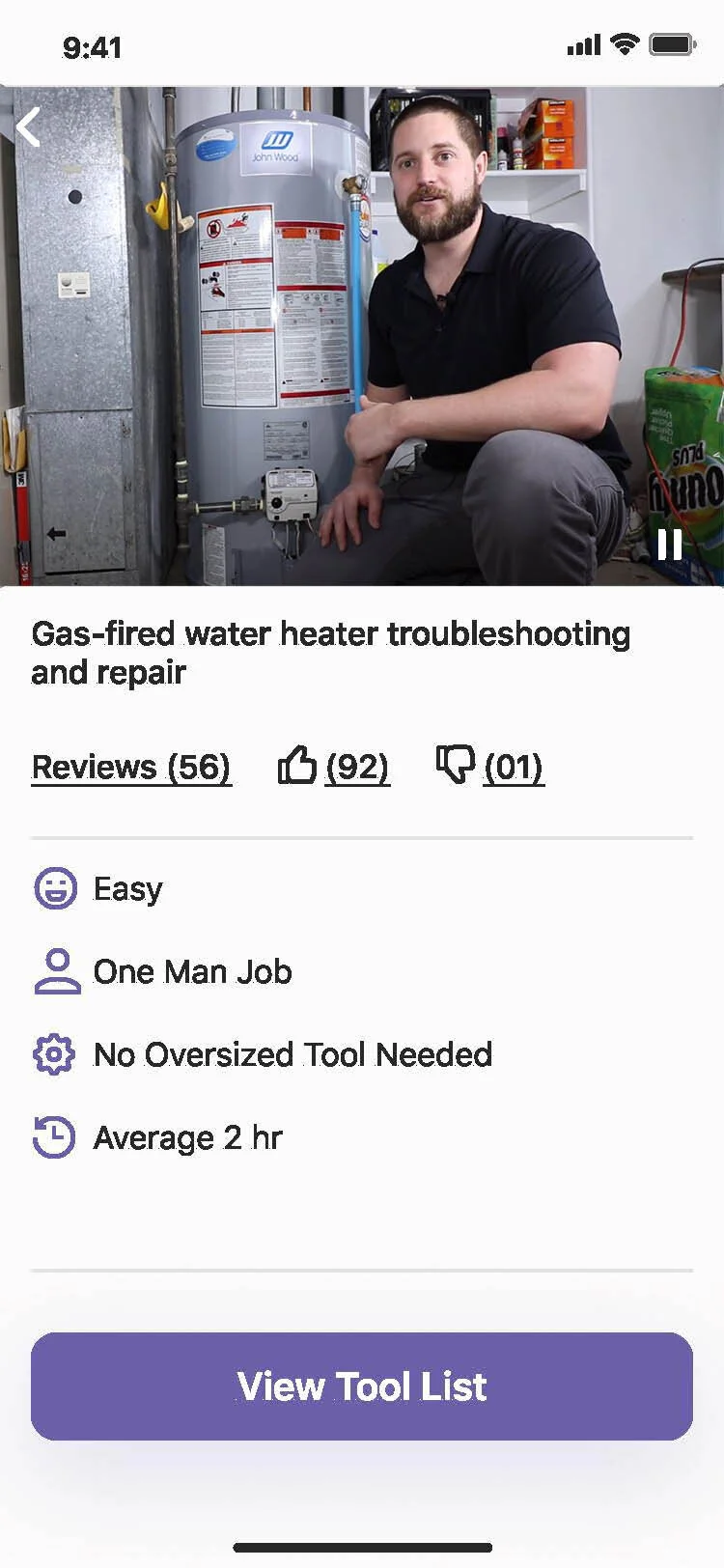
All of the participants found videos helpful for them to learn how to do the project by themselves. (Refer to screen 2 below)
80% of the participants would like to type in their problems instead of the audio chat. (Refer to screen 1 below)
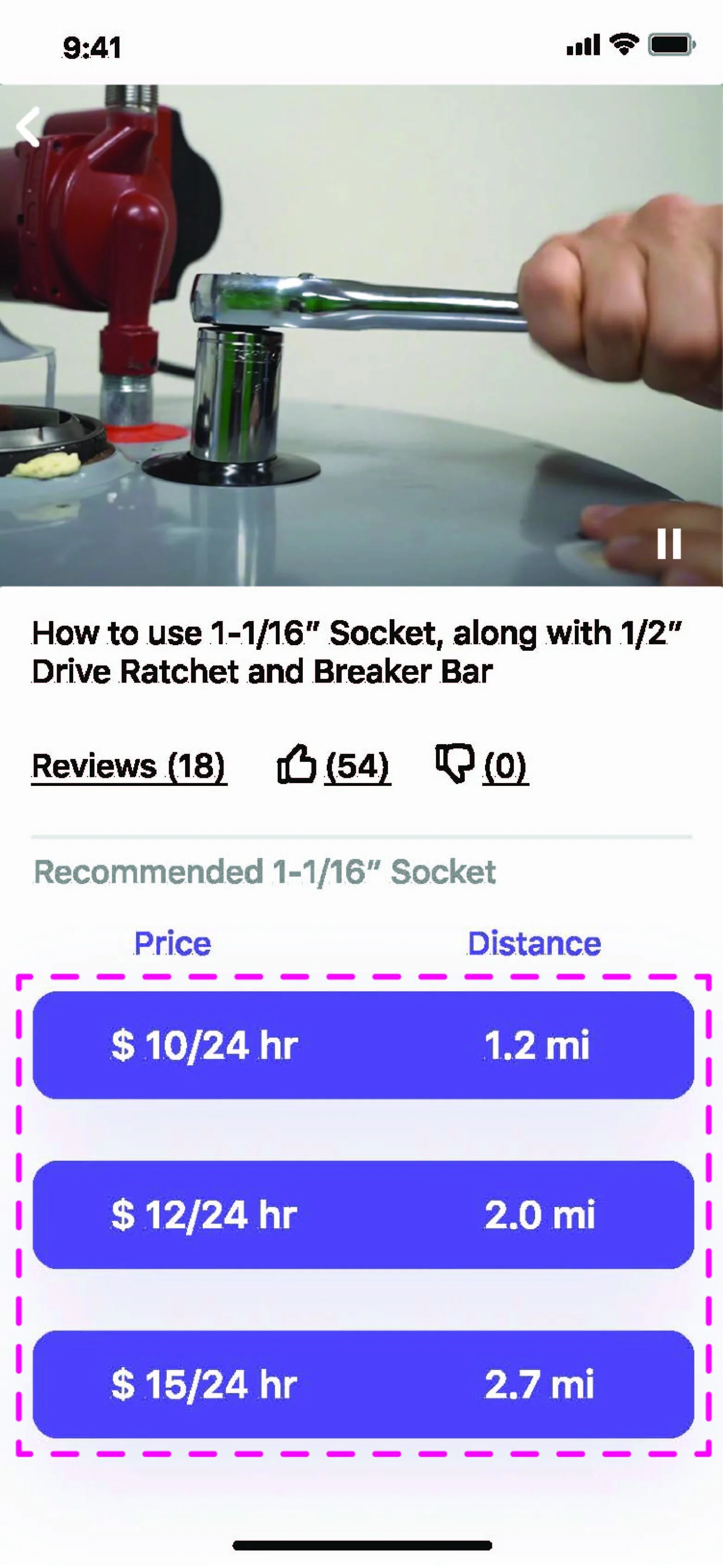
60% of the participants were confused on the “choose a recommended tool“ page. They wanted more information about the tool such as available time, condition, reviews, etc. (Refer to screen 3 below)
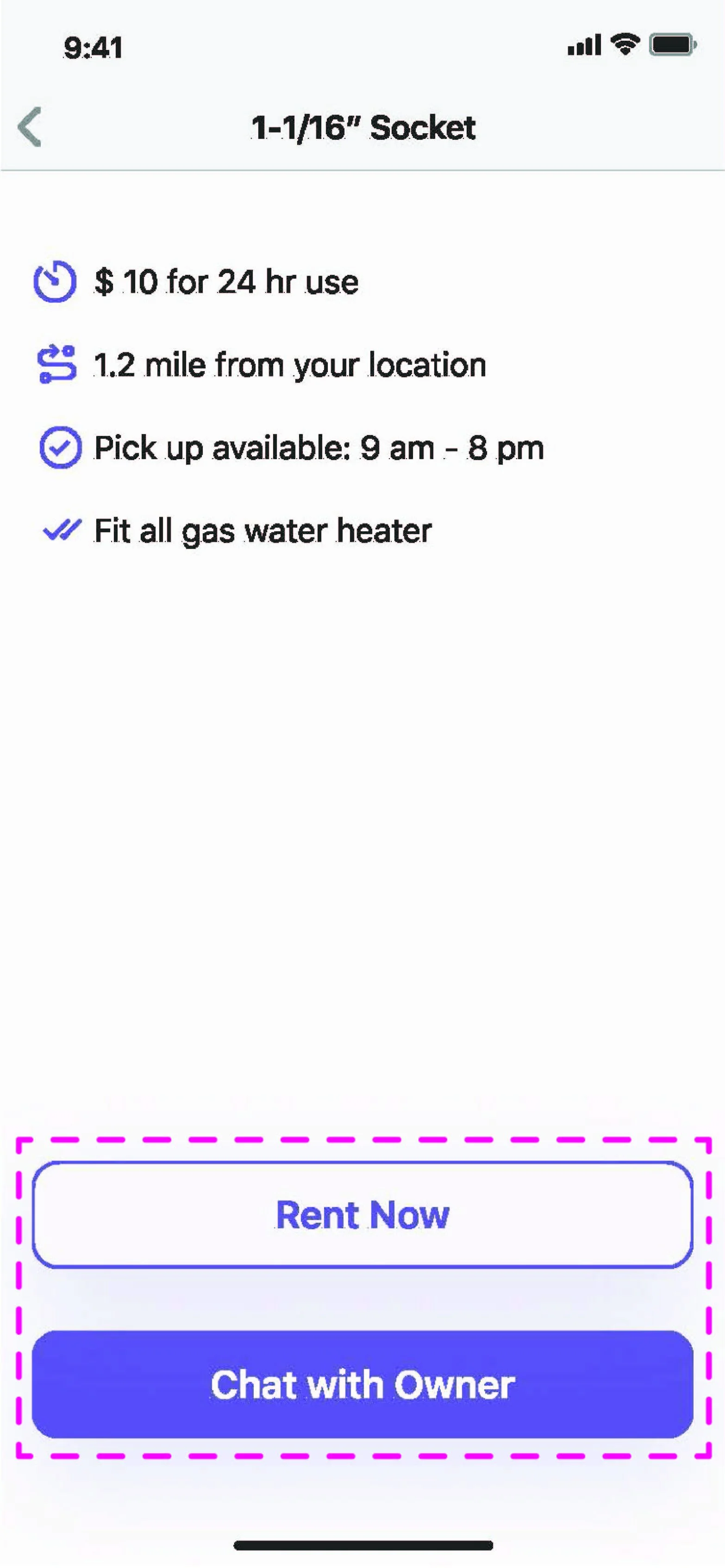
60% of the participants thought it would make more sense if they learn more information about the tool first and then watch a video about how to use the tool instead of the other way around. (Refer to screens 3 & 4 below)
60% of the participants wanted to have the option to chat with the tool owner before and after renting the tool to make sure it would work for their projects, to set up a pick-up time, and to ask more questions. (Refer to screen 4 below)
40% of the participants found it difficult to rent multiple tools at one time. (Refer to screen 4 below)
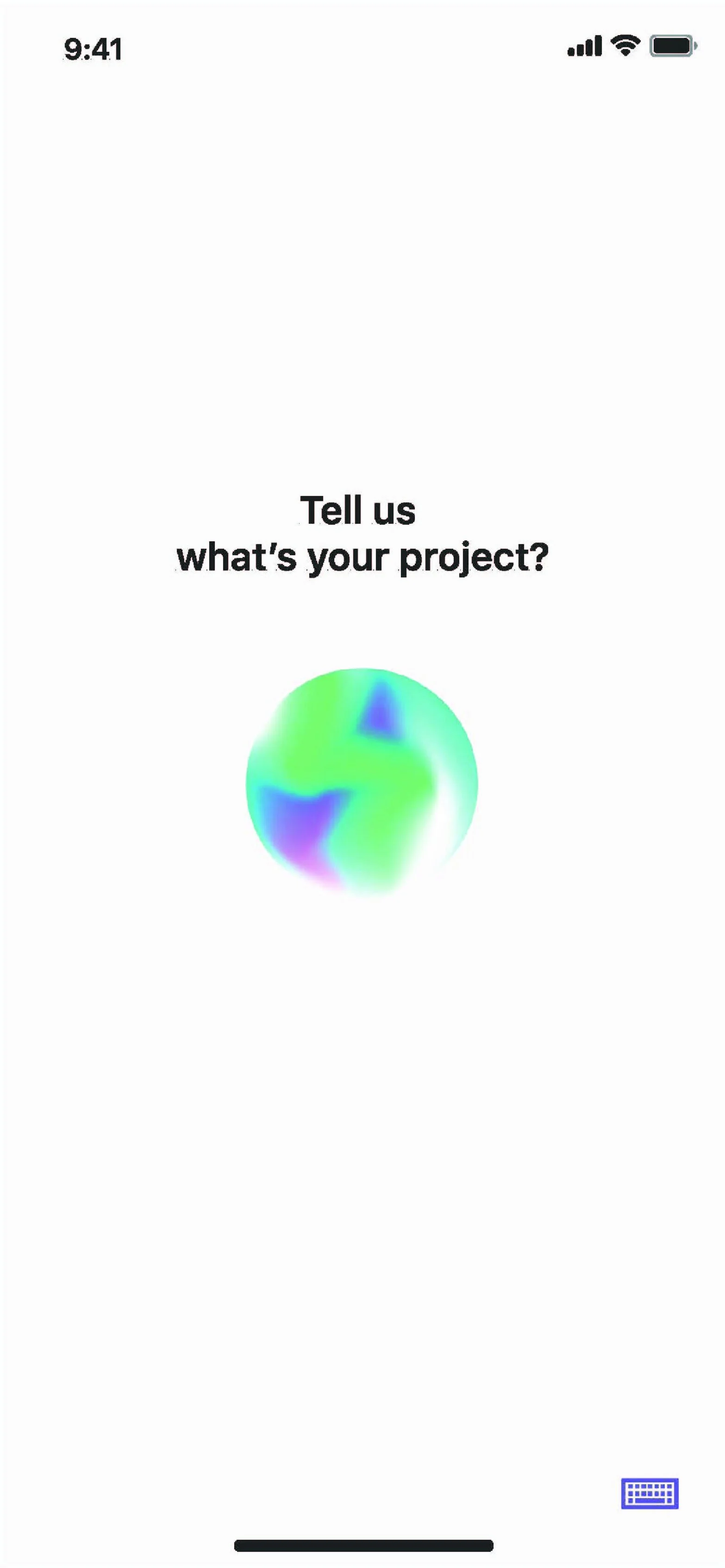
Screen 1
Screen 2
Screen 3
Screen 4
DESIGN ITERATION
We changed the “recommended tool” page to A CARD instead.
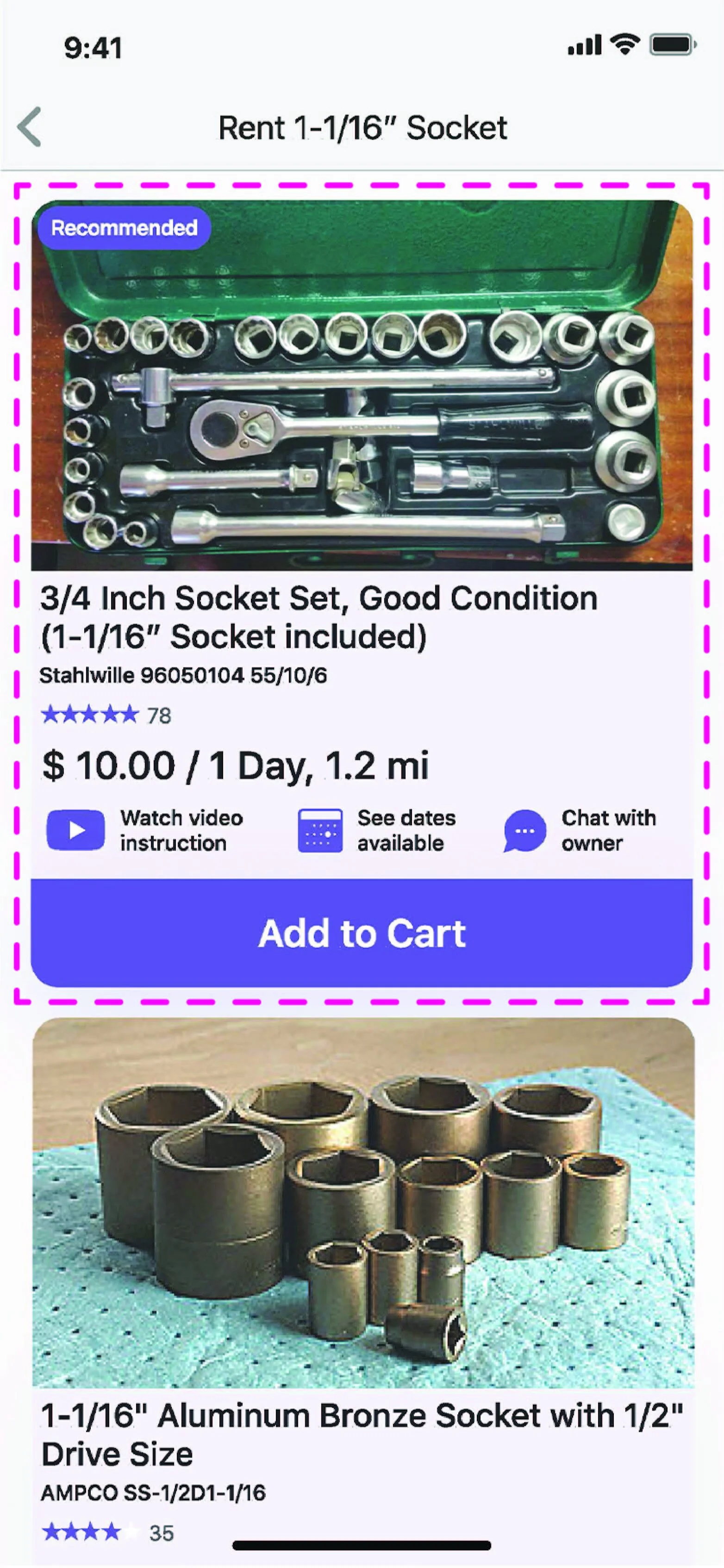
On the card, more information about the tool is provided compared to the previous version. And “Add to Cart“ button acts as a more clear and more effective call to action button.
We adjusted the screen sequence so Parth will learn more about the tool first and then watch a video about how to use the tool.
The card gives Parth options to chat with the owner before and after adding the tool to the cart. And users are able to add more tools to the cart and pay for them together.
PROTOTYPE
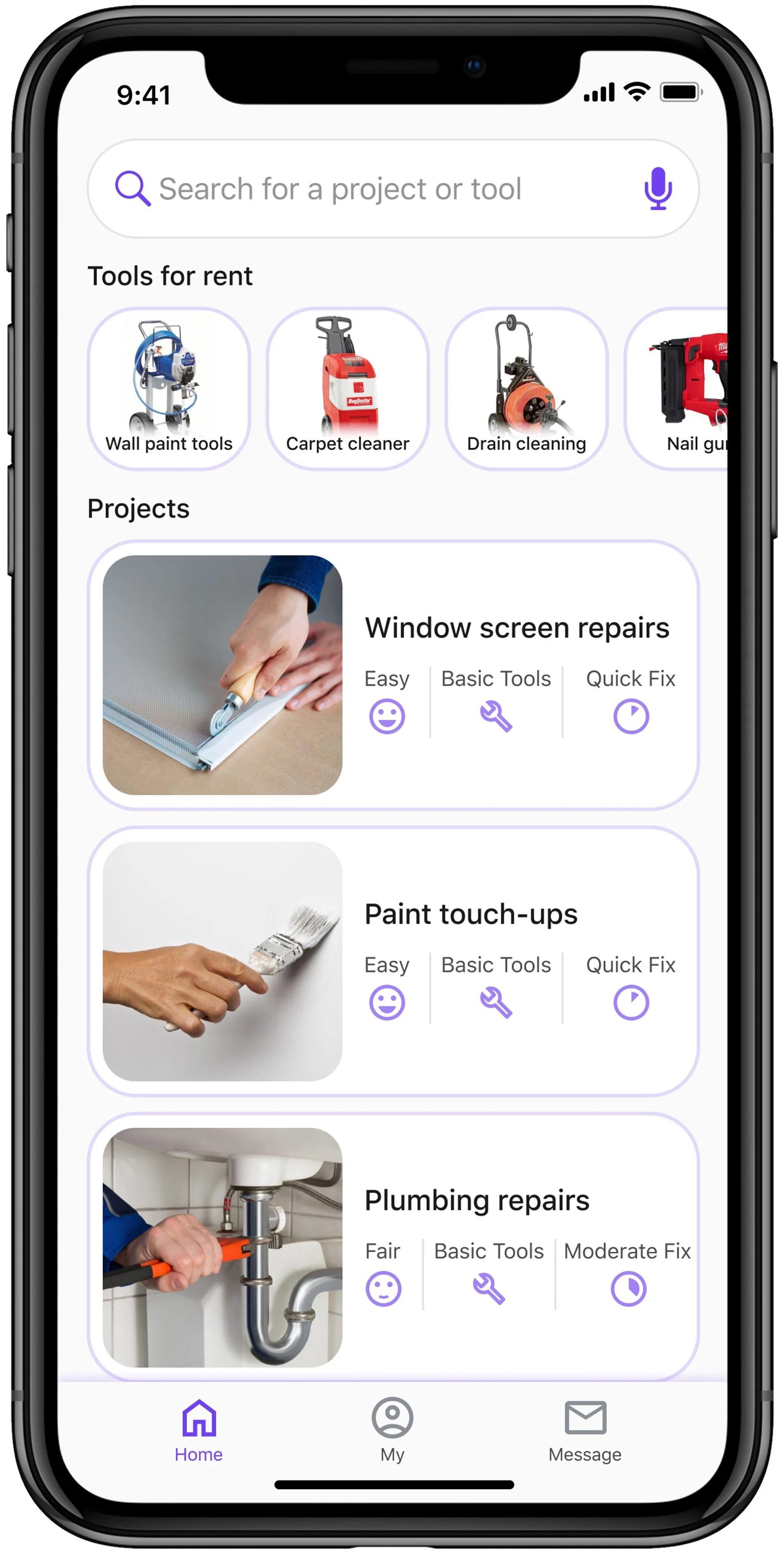
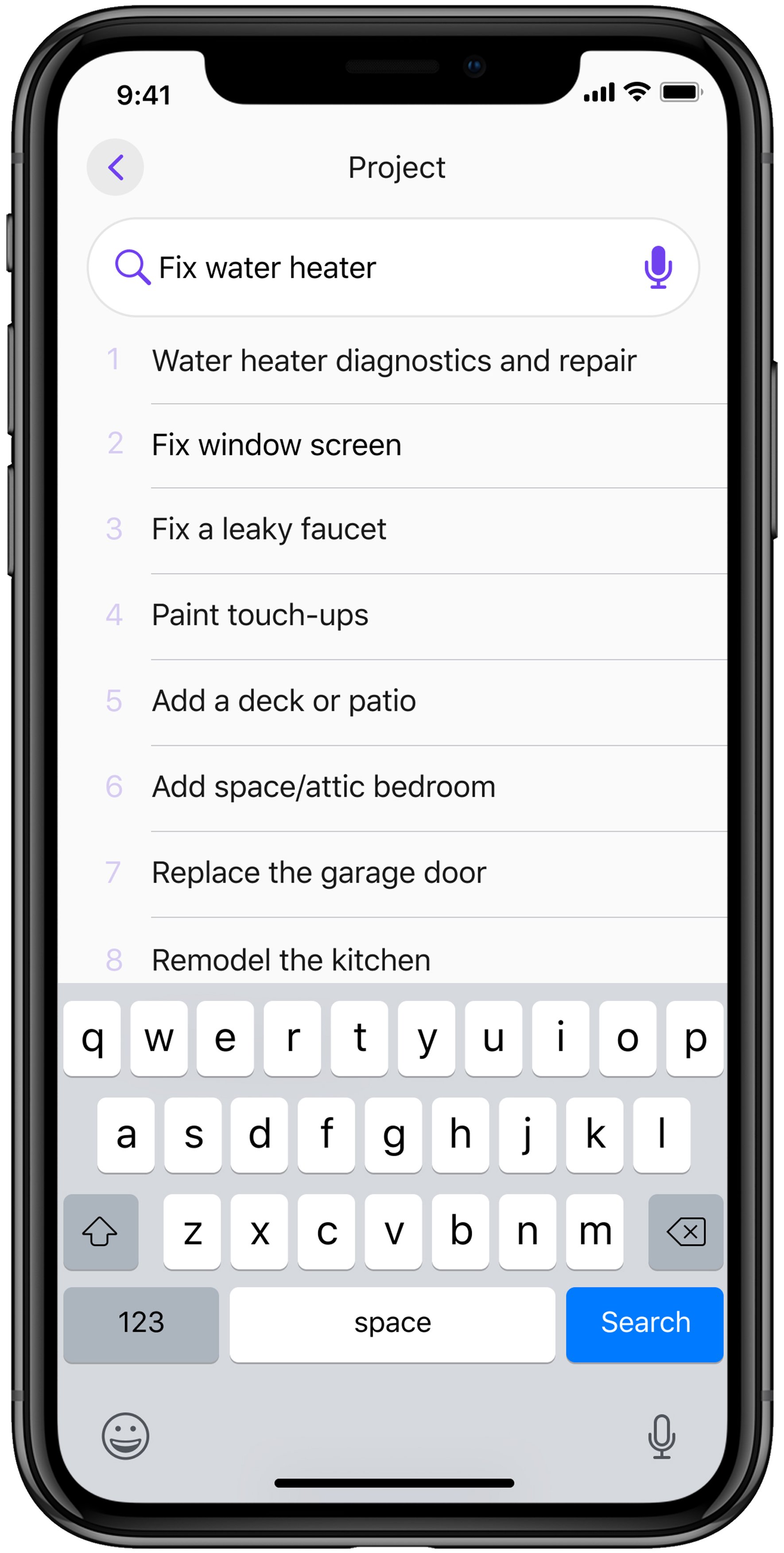
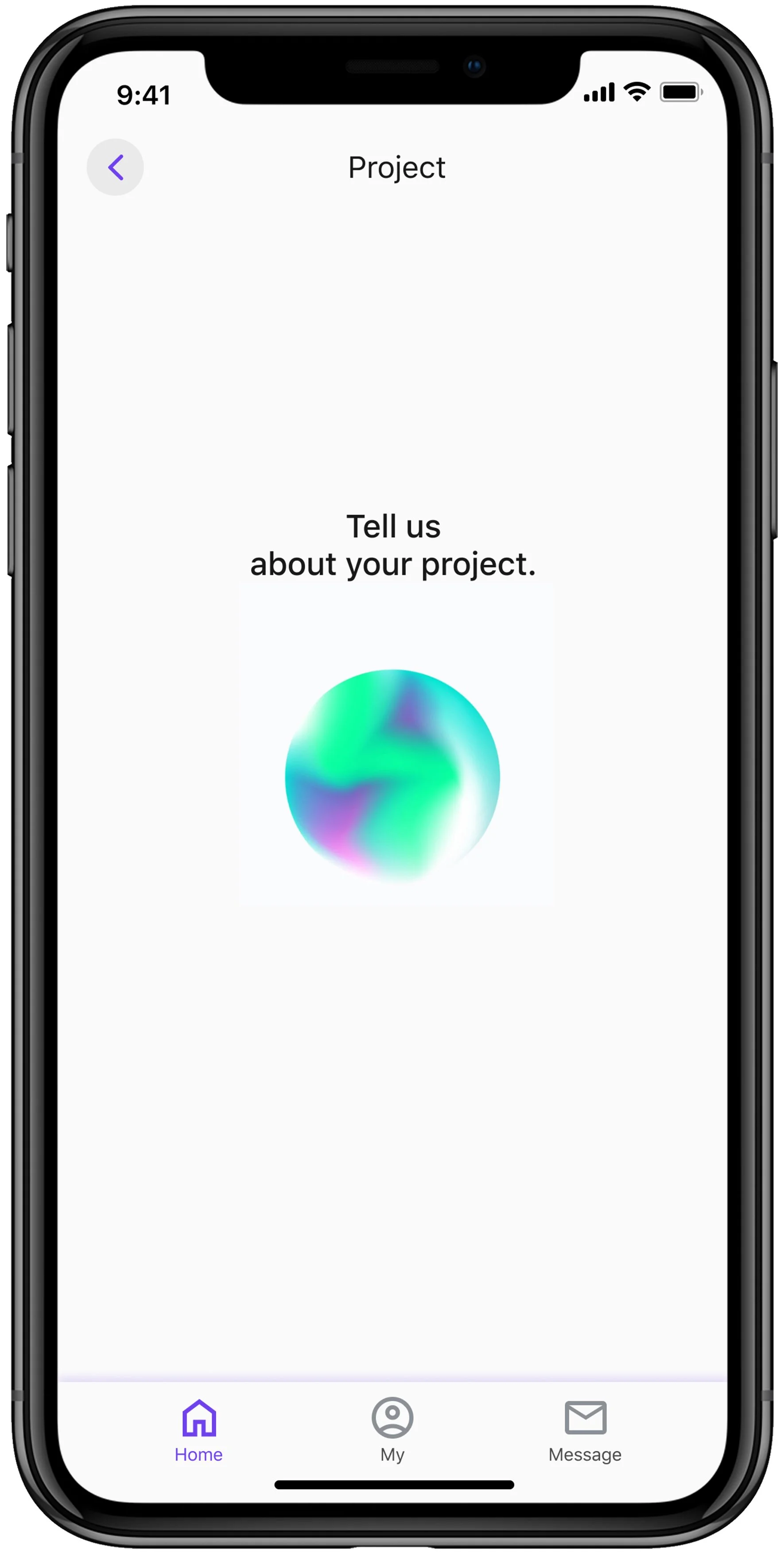
Find a project or tool you're interested in.
Learn more about the project or tool.
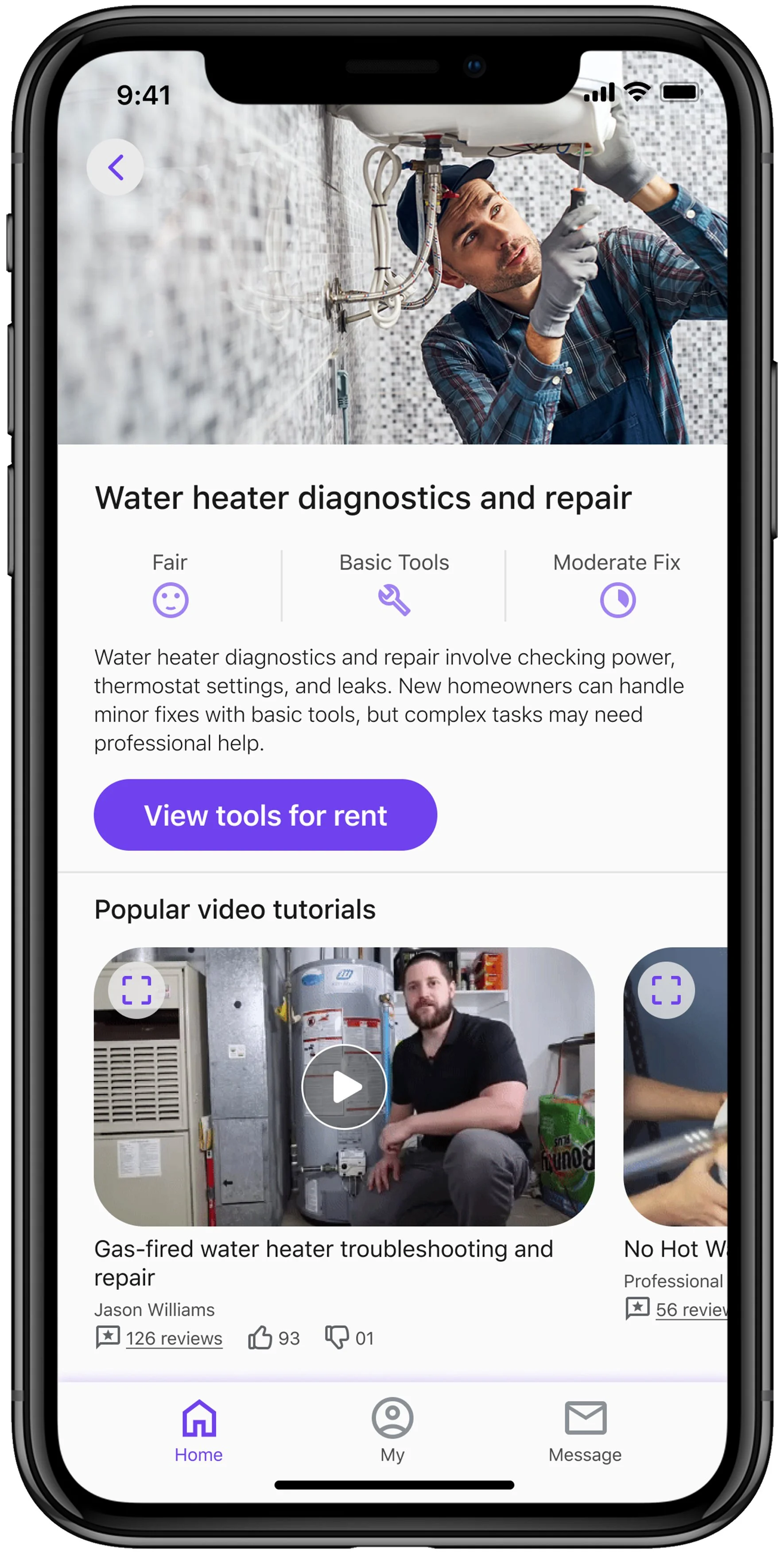
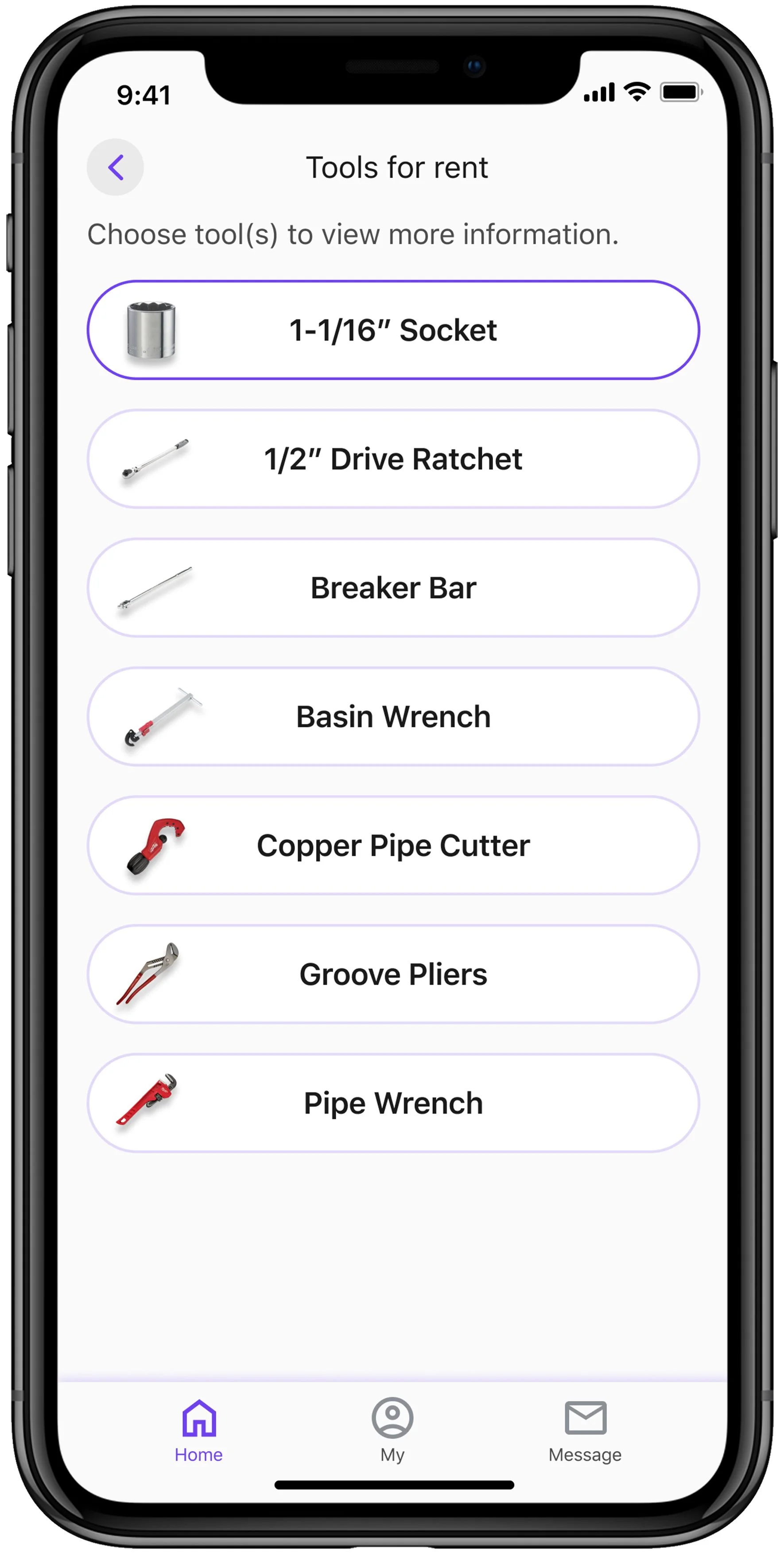
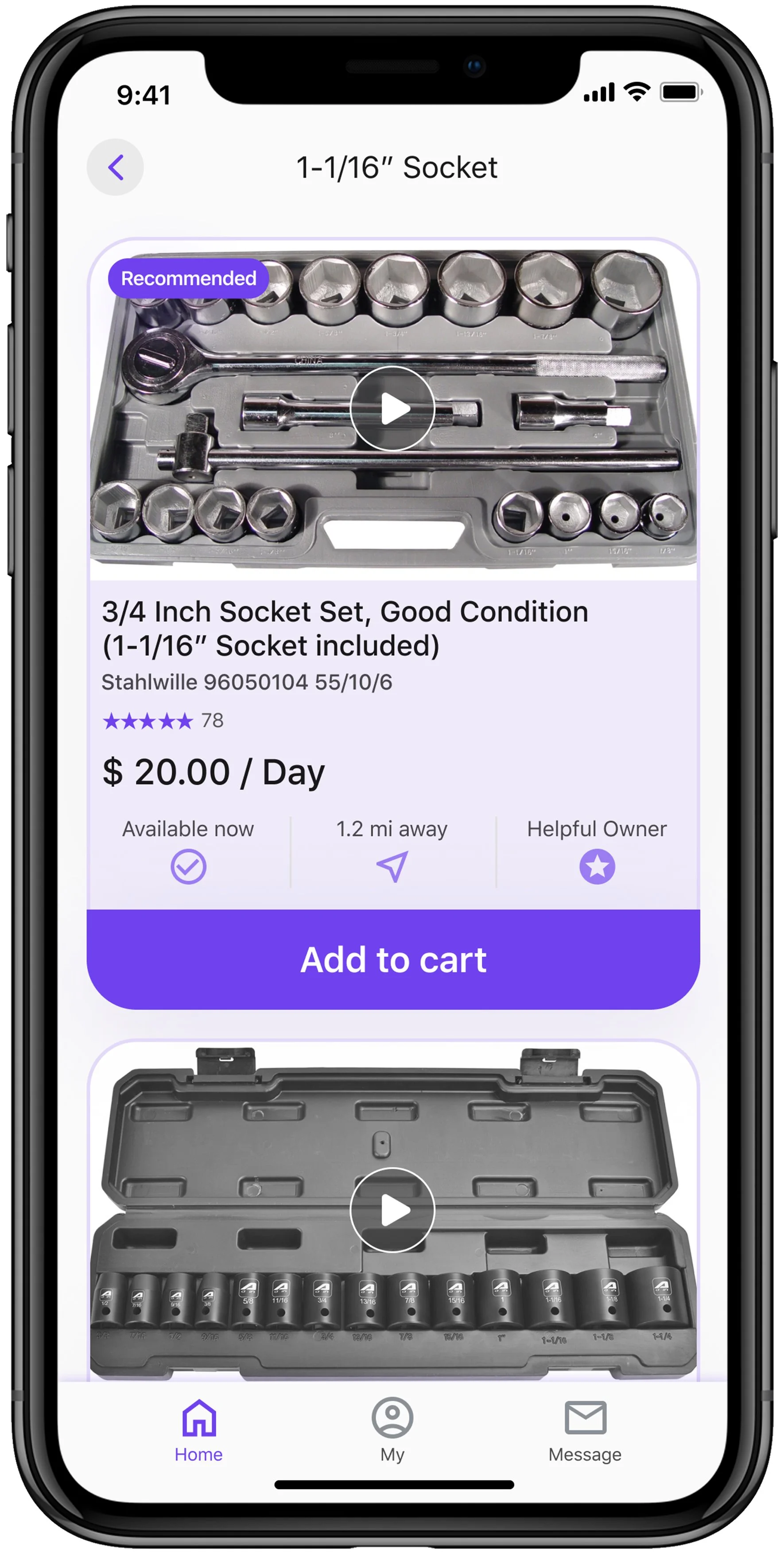
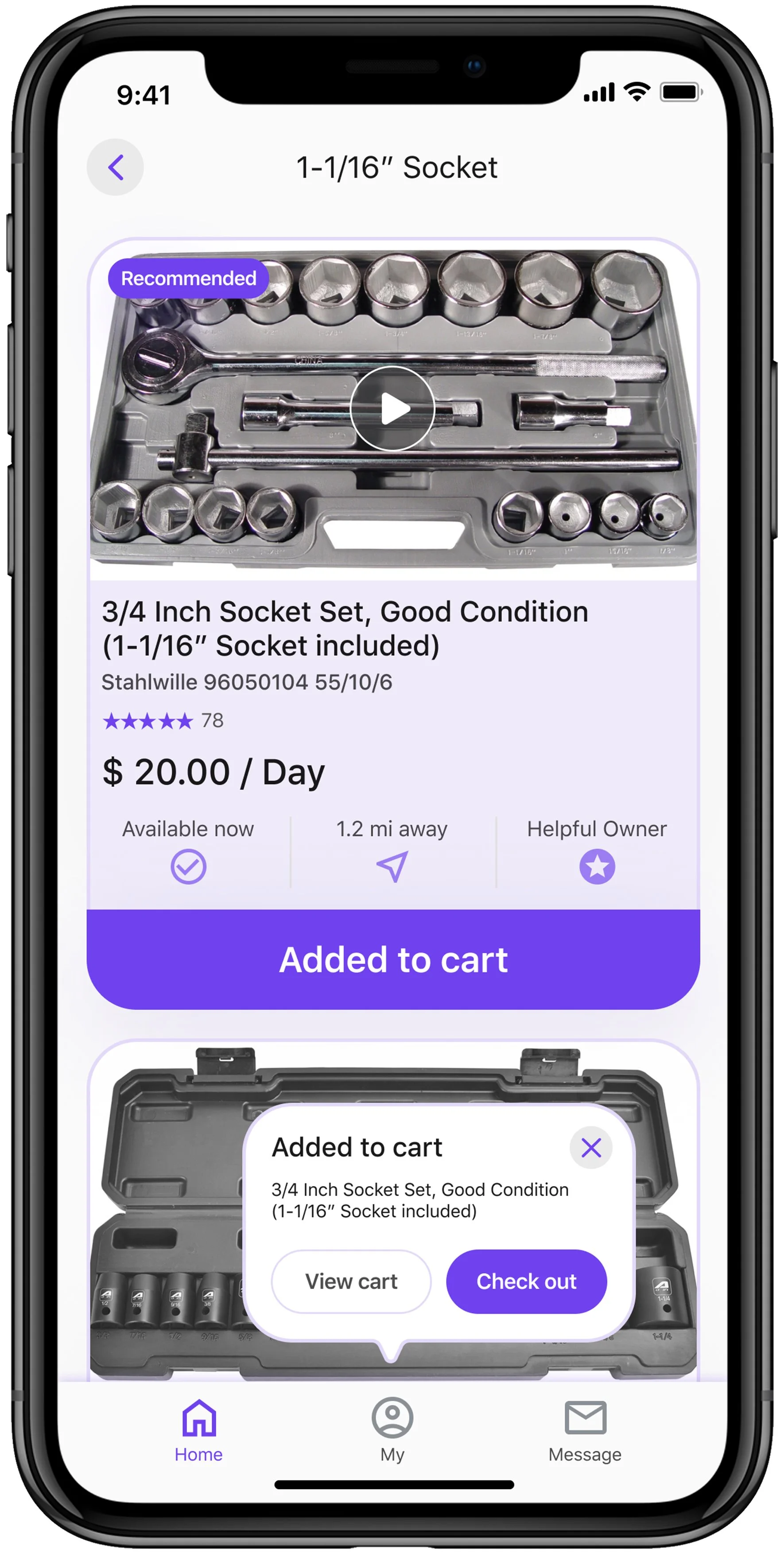
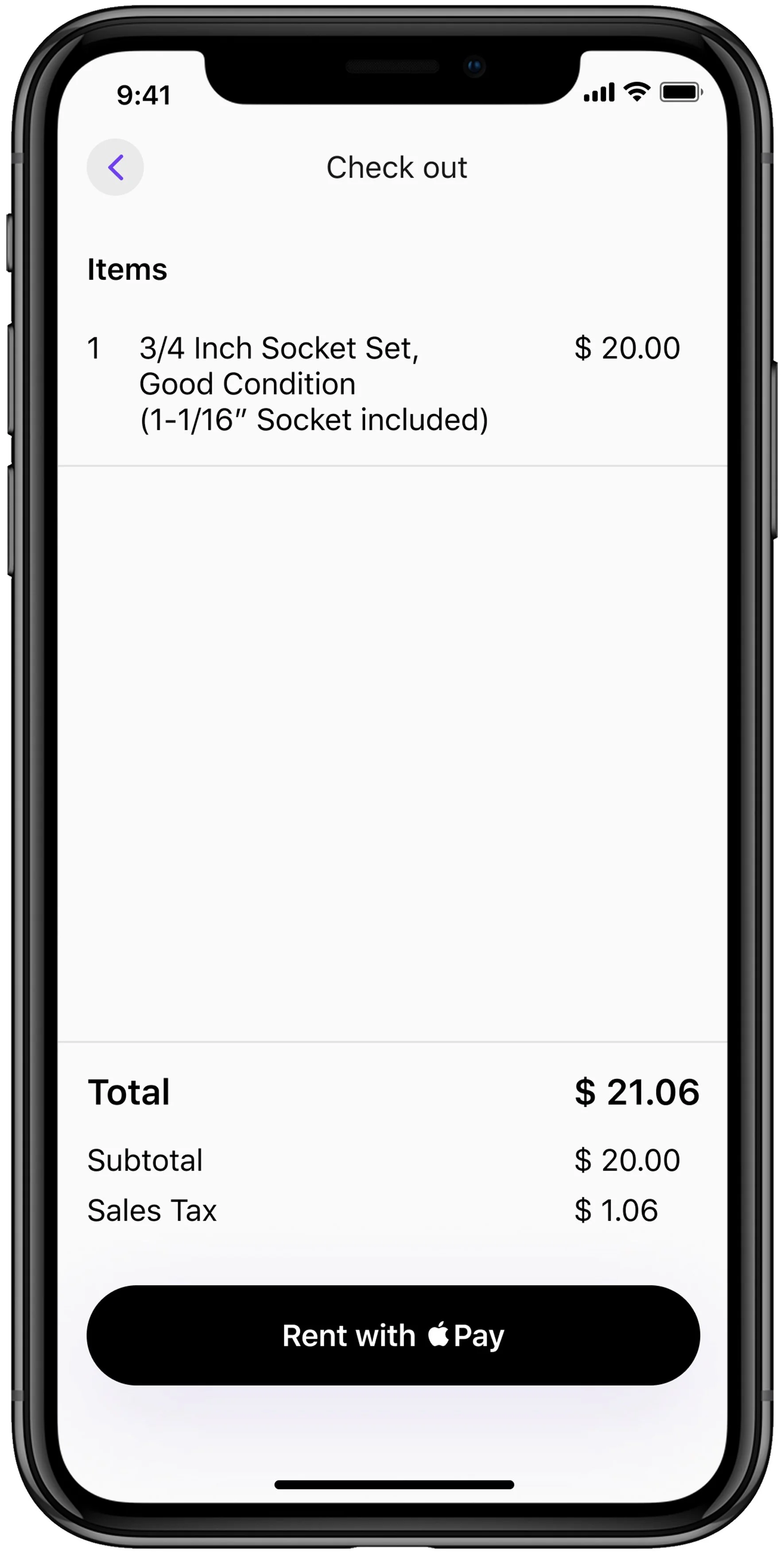
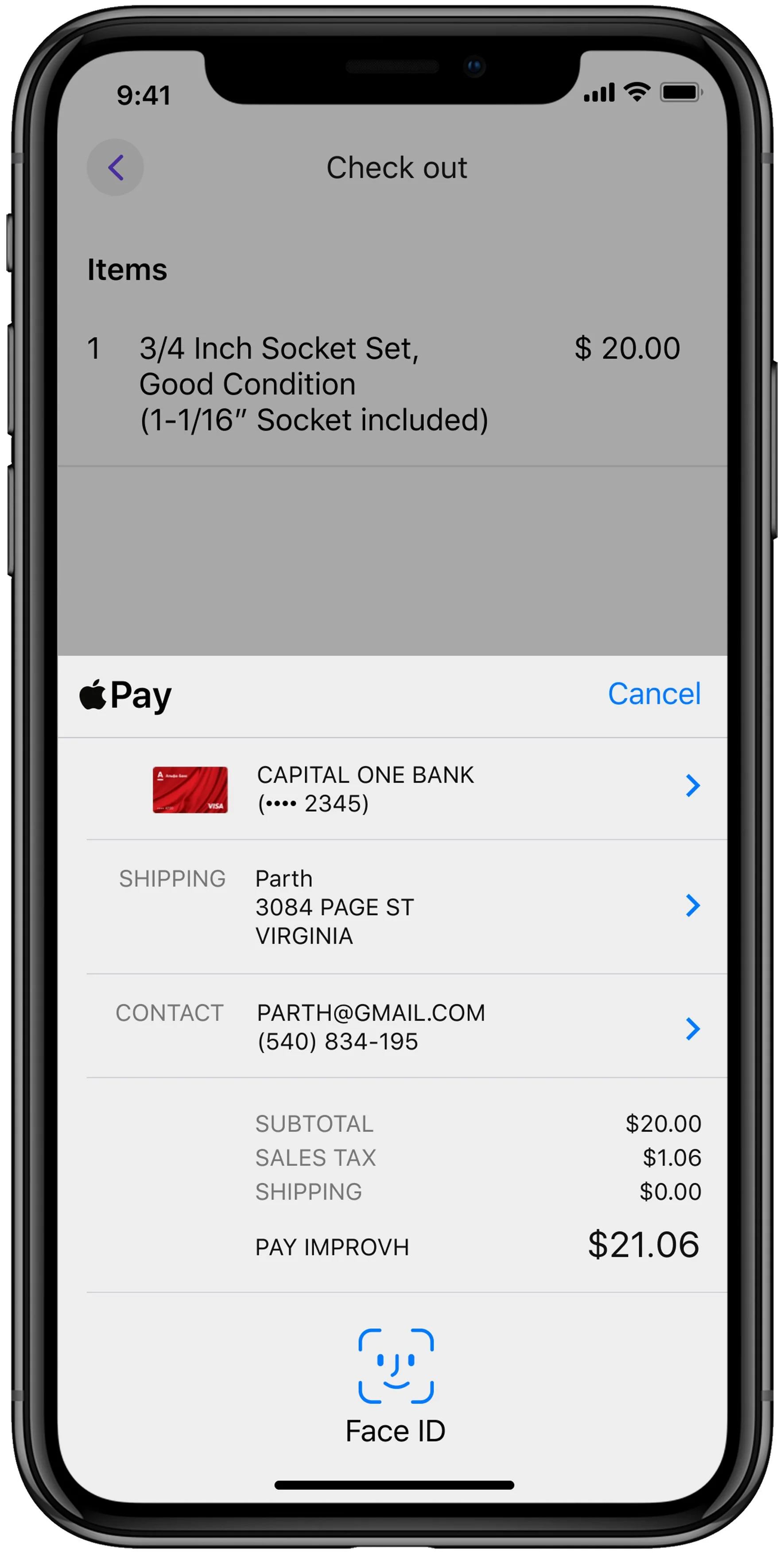
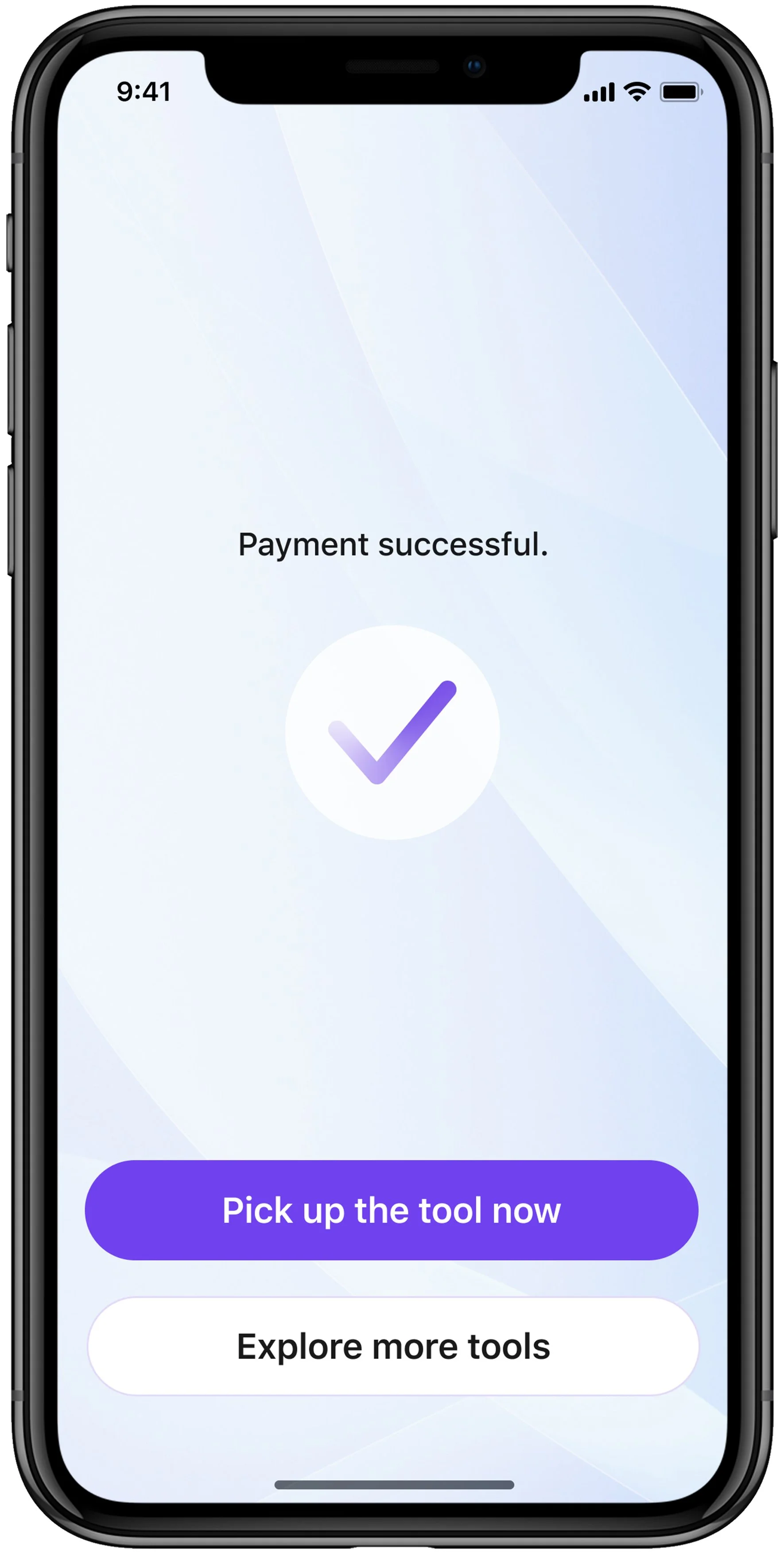
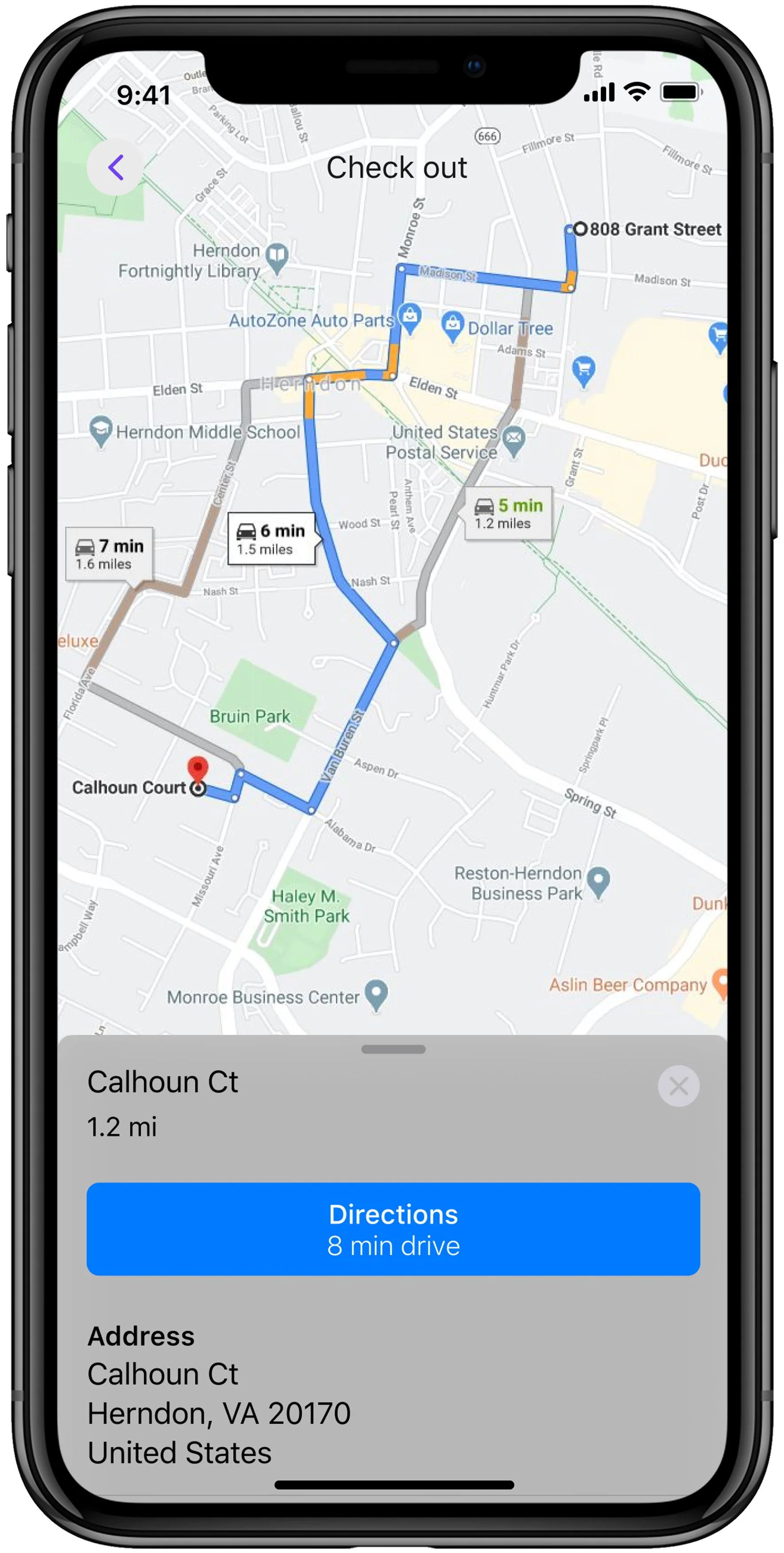
Make payment and pick up your rental tools.
Reflection
Findings
The step-by-step video instruction builds up users’ confidence when learning something new.
The interaction provides easy access and flexible time for tool rental.
Real-time chat with professionals helps users solve problems efficiently.
Takeaways
Asking the right question is very important.
I learned that ask the right questions during rounds of user interviews. All participants are different and some of them are not easy to speak their minds. So it’s important to change the way you ask and change the questions you ask.
The ability to speak their language when working with stakeholders and engineers.
I worked with a stakeholder and an engineer for this project. I have been learning about their needs and working out solutions with them. The process is different from I worked as a solo designer and solved problems all by me. I need to also think about their sides to figure out solutions.
What can I do differently?
Do more design iterations during ideate.
Conduct more usability testing during the design process.
Add some protection plans to the tool.